
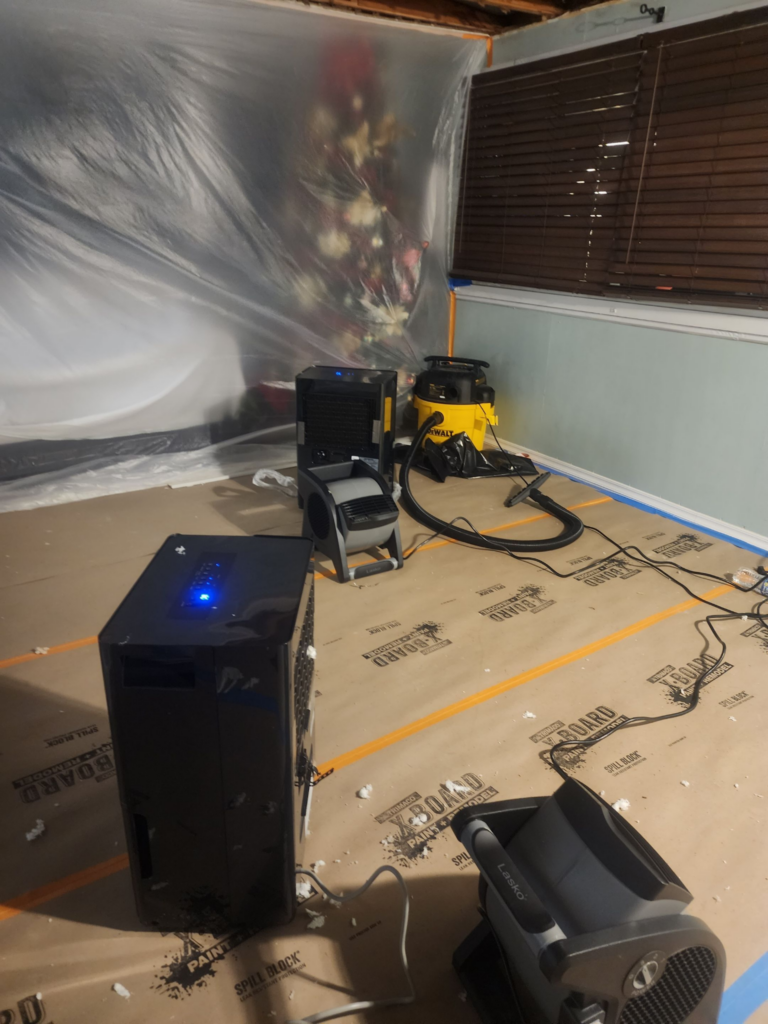
Water Mitigation in Tacoma, WA: What to Do After Water Damage
Water damage can happen quickly and often when homeowners least expect it. A leaking pipe, roof leak, appliance failure, overflowing fixture, or other water intrusion can affect flooring, drywall, insulation, ceilings, and other building materials.
When water enters your home, responding quickly can help limit additional damage and reduce the amount of material that may need to be removed or replaced.
If you are dealing with water damage in Tacoma, Lakewood, or surrounding Pierce County communities, understanding the water mitigation process can help you know what to expect and what steps should be taken next.
What Is Water Mitigation?
Water mitigation is the process of taking immediate steps to stop or limit additional damage after a water intrusion.
The objective is not simply to remove visible water. Moisture can migrate into materials and areas that may not appear wet from the surface.
Depending on the situation, professional water mitigation may involve identifying affected areas, water extraction, removal of damaged materials when necessary, placement of drying equipment, moisture monitoring, and documentation of the affected property.
Once the affected area has been properly addressed and dried, restoration repairs can begin.
What Can Cause Water Damage in a Home?
Water damage can have many different causes. Some common situations include:
- Plumbing leaks or broken pipes
- Roof leaks
- Overflowing sinks, tubs, or toilets
- Water heater failures
- Appliance supply-line leaks
- Storm-related water intrusion
- Drain or sewer-related incidents
- Water entering through damaged building components
The appropriate response depends on the source of the water, the materials affected, the extent of the damage, and how long the area has been wet.
Finding and addressing the source should be one of the first priorities.
Why Is Fast Water Mitigation Important?
Water doesn’t necessarily remain where you can see it.
It may migrate underneath flooring, behind baseboards, into drywall assemblies, insulation, cabinets, subfloors, or other concealed areas.
Waiting too long can allow moisture to affect a larger portion of the property and can complicate the drying and restoration process.
That is why a professional assessment should look beyond the visible water.
What Happens During Professional Water Mitigation?
Every property and water-loss situation is different, but a professional mitigation project generally follows a systematic process.
1. Damage Assessment
The affected areas are inspected to determine the apparent source and extent of the water intrusion.
Moisture detection equipment may be used to identify materials and areas that have been affected beyond what is immediately visible.
2. Water Extraction
When standing or excess water is present, extraction may be necessary.
Removing excess water allows the drying process to begin more efficiently.
3. Removal of Affected Materials When Necessary
Depending on their condition and the circumstances of the loss, some materials may need to be removed to properly access and dry affected areas.
This can include materials such as damaged drywall, insulation, flooring, baseboards, or other components when appropriate.
Not every water loss requires extensive demolition. The appropriate approach depends on the actual conditions found at the property.
4. Drying and Dehumidification
Professional drying equipment may be placed to help remove moisture from the affected environment and building materials.
This may include air movers and dehumidification equipment, with the type and quantity depending on the conditions of the project.
5. Moisture Monitoring
Drying is a process, not simply placing equipment and returning several days later.
Affected materials and environmental conditions should be monitored during the drying process to evaluate progress and determine when drying goals have been reached.
6. Documentation
Photographs, measurements, moisture readings, equipment information, and other project documentation can provide an important record of the conditions and work performed.
Documentation can be particularly important when the water damage involves an insurance claim.
Water Mitigation vs. Water Damage Restoration: What's the Difference?
These terms are related, but they do not mean exactly the same thing.
Water mitigation focuses primarily on controlling the immediate damage, removing water when necessary, drying affected areas, and preventing the situation from becoming worse.
Water damage restoration involves repairing or replacing affected building materials and returning the property toward its pre-loss condition after mitigation has been completed.
For example, a project could begin with water extraction, removal of affected drywall and insulation, drying and moisture monitoring. After the area is dry, the restoration phase could include drywall installation, texture, painting, flooring, or other necessary repairs.
Does Homeowners Insurance Cover Water Damage?
Some water-damage losses may be covered by homeowners insurance, while others may not be. Coverage depends on the cause of the loss, the policy, exclusions, deductibles, and the specific circumstances.
A contractor cannot determine coverage on behalf of an insurance company.
However, when an insurance-related loss is involved, proper damage documentation, photographs, measurements, mitigation records, and repair documentation can be important parts of the restoration process.
HG Contractors LLC has experience performing insurance-related mitigation and property restoration projects and documenting the work performed.
Can Water Damage Lead to Mold?
Excess moisture can create conditions that support microbial growth, particularly when wet materials remain untreated for an extended period.
This is another reason why homeowners should not ignore water intrusion simply because the visible surface appears to have dried.
Professional assessment and moisture monitoring can help determine whether affected materials are actually drying.
Should You Remove Wet Drywall or Flooring Yourself?
Before beginning demolition, it is important to understand what materials are affected and what hazards may be present.
Depending on the age and construction of a property, certain materials may require additional evaluation or testing before they are disturbed.
Professional assessment can help determine which materials can potentially remain and dry in place and which may require removal.
Unnecessary demolition can increase restoration costs, while insufficient removal can prevent affected assemblies from drying properly.
Water Mitigation Services in Tacoma & Pierce County
HG Contractors LLC provides water mitigation and property restoration services in Tacoma, Lakewood, Puyallup, DuPont, Spanaway, and surrounding Pierce County communities.
Our team can assist with assessment and documentation, water extraction when needed, drying and dehumidification equipment, moisture monitoring, selective demolition when necessary, and restoration of affected building materials.
Because HG Contractors also performs restoration and construction services, we can help take a project from the initial mitigation phase through the necessary repairs, depending on the scope of the loss.
Need Water Mitigation in Tacoma, WA?
If your property has experienced water damage, addressing the problem quickly can help prevent additional damage.
HG Contractors LLC provides professional water mitigation and restoration services for residential and commercial properties throughout Tacoma and surrounding Pierce County communities.